
Cataract Surgery (Phaco/MICS)
Restore Clear Vision with Advanced Cataract Treatment
Cataracts are one of the leading causes of vision impairment and blindness globally, but with advanced treatment options like Phacoemulsification (Phaco) and Micro Incision Cataract Surgery (MICS), you can regain clear, vibrant vision. At Akshaya Nethralaya, we specialize in offering the latest, most effective cataract surgery techniques to restore your vision with minimal downtime and discomfort.
What Is Cataract Surgery (Phaco/MICS)?
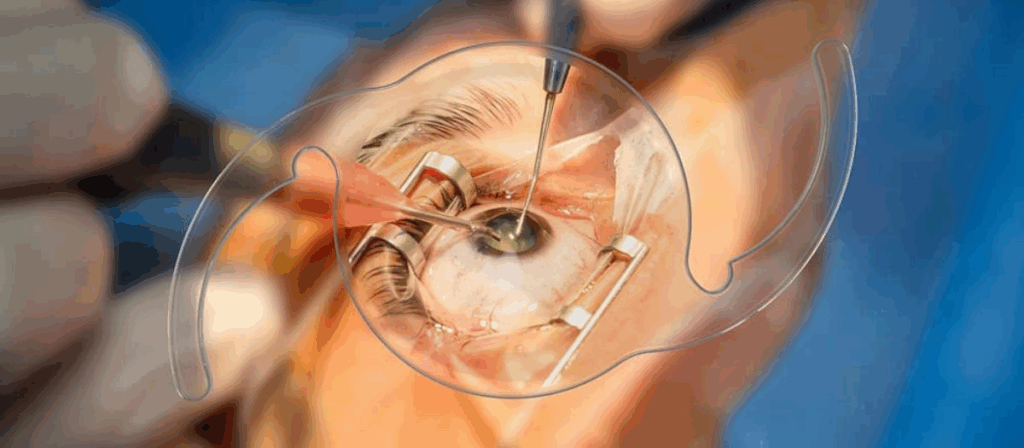
Cataract surgery is a procedure to remove the cloudy lens of the eye (cataract) and replace it with an artificial intraocular lens (IOL). There are two main types of cataract surgery available at Akshaya Nethralaya:
Micro Incision Cataract Surgery (MICS)
MICS is a more advanced technique that uses even smaller incisions, making it minimally invasive. This technique results in faster healing times, less discomfort, and a reduced risk of complications.
Phacoemulsification (Phaco)
Phacoemulsification is the most commonly used method for cataract removal. A small incision is made in the eye, and an ultrasonic probe is used to break up the cloudy lens into small pieces, which are then suctioned out. The lens is replaced with an IOL to restore clear vision.
Both procedures are highly effective in restoring vision and offer benefits such as:
- Minimal incisions
- Quick recovery time
- Reduced risk of complications
- Better visual outcomes
Why Choose Phaco/MICS for Cataract Surgery?
Minimal Invasive Procedure
Both Phaco and MICS are minimally invasive, requiring only small incisions, which means a faster recovery and less discomfort post-surgery.
Quick Recovery
Most patients experience significant improvement in vision within a few days after surgery. The use of advanced techniques ensures that the recovery time is short and pain is minimal.
Reduced Risk of Infection
Because the incisions are small, the risk of infection is minimized. Our advanced sterile techniques further reduce the chances of post-surgery complications.
Improved Visual Clarity
By replacing the cloudy natural lens with a high-quality intraocular lens (IOL), patients can experience restored vision with improved clarity.
Different Types of Intraocular Lenses (IOLs)
Choosing the right Intraocular Lens (IOL) is crucial for optimal visual outcomes after cataract surgery. At Akshaya Nethralaya, we offer various types of IOLs to suit your specific visual needs. These include:
1. Monofocal IOL
Monofocal IOLs are the most commonly used lenses. They provide clear vision at a single distance – typically for either distance vision or near vision. Patients usually need to wear glasses for close-up tasks after surgery, such as reading or using a smartphone.
Ideal for: People who are satisfied with clear distance vision and can use glasses for near tasks.
2. Multifocal IOL
Multifocal IOLs offer clear vision at multiple distances – near, intermediate, and far – allowing patients to see well without the need for glasses or contact lenses for most activities.
Ideal for: People who want to reduce their dependence on glasses and maintain good vision at various distances, such as reading, driving, and computer work.
3. Accommodating IOL
Accommodating IOLs are designed to move or change shape within the eye to help you focus on objects at varying distances. They can mimic the eye’s natural focusing ability and offer a wider range of vision without the need for glasses.
Ideal for: People who desire a more natural experience with fewer glasses requirements after surgery.
4. Toric IOL
Toric IOLs are specially designed for patients who have astigmatism (an irregularly shaped cornea). These lenses can correct astigmatism and provide clear vision at various distances, reducing or eliminating the need for glasses or contact lenses for many activities.
Ideal for: People with astigmatism who want to correct their vision and reduce their dependence on glasses.
5. Extended Depth of Focus (EDOF) IOL
EDOF IOLs offer improved depth of field, providing better vision at both near and far distances. They can be an excellent option for patients who wish to reduce their reliance on glasses after cataract surgery.
Ideal for: People who want good vision across a range of distances without wearing glasses.
Benefits of Cataract Surgery at Akshaya Nethralaya
Experienced surgeons who specialize in Phaco and MICS cataract procedures, ensuring optimal outcomes.
Personalized care with comprehensive consultation to help you choose the best IOL option based on your lifestyle and visual needs.
Tips for Cataract Surgery Recovery

Be sure to follow all post-operative instructions provided by your surgeon.
Eye drops are often prescribed to prevent infection and reduce inflammation.
Avoid straining your eyes, especially in the first few days after surgery.
Protect your eyes from water during the initial recovery period to reduce infection risks.
Protect your eyes from bright lights and UV rays, especially after surgery.
Who Should Consider Cataract Surgery?
If your vision has become blurry or hazy, it could be a sign of cataracts, and surgery might be recommended.
Cataracts are most common in people over 60, though they can develop earlier.
Cataracts can cause glare and halos around lights, making night driving difficult.
If you notice frequent changes in your glasses prescription, it could be due to cataracts.
Book Your Cataract Surgery Consultation Today
If you or a loved one are suffering from cataracts and want to restore your vision, Akshaya Nethralaya offers the most advanced cataract surgery techniques and the latest IOL options to help you see clearly again. Our skilled surgeons are ready to guide you through every step of the process.